Top Compact Hydraulic Cylinder Applications and Benefits Guide?
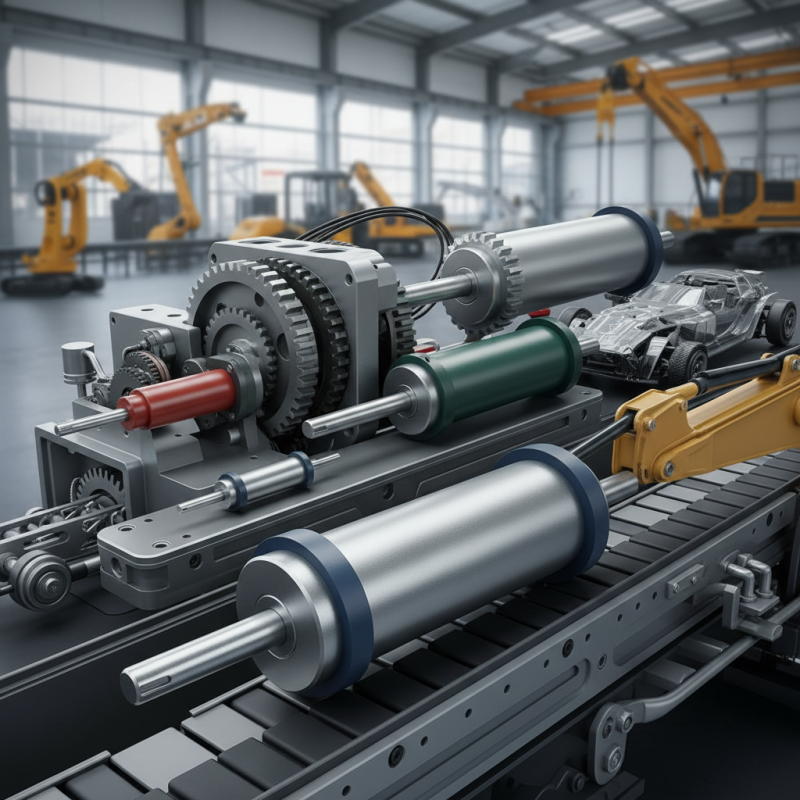
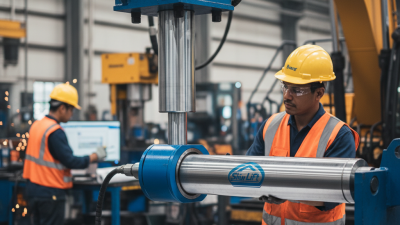
Compact hydraulic cylinders play a vital role in various industries. Their unique design offers enhanced efficiency, especially in tight spaces. These cylinders are widely used in construction, manufacturing, and automotive applications. They provide powerful force within a compact footprint.
In construction, compact hydraulic cylinders are essential for excavators and loaders. They enable smoother operation and increase overall performance. In manufacturing, they enhance machinery precision, significantly improving productivity. However, many industries underestimate their significance.
The benefits of compact hydraulic cylinders are numerous. They offer space-saving solutions and reduce weight in machinery. However, some users still struggle with maintenance and installation. Awareness of these cylinders' advantages can improve operational efficiency. It is important to reflect on how we incorporate such valuable tools in our systems.
Overview of Compact Hydraulic Cylinders
Compact hydraulic cylinders play a vital role in various industries. Their smaller size and efficient design make them suitable for applications where space is limited. For instance, in construction equipment and automated machinery, these cylinders maximize performance while minimizing footprint. A recent report highlighted that compact hydraulic cylinders can reduce installation space by up to 40%. This statistic reflects their growing importance in modern engineering.
The benefits of using compact hydraulic cylinders extend beyond just space savings. They often exhibit higher energy efficiency. According to industry studies, these cylinders can operate at up to 90% efficiency compared to larger alternatives. This efficiency translates into lower operational costs and energy consumption. However, users must recognize that higher efficiency does not always equate to better performance in all scenarios. Sometimes, compact cylinders may struggle to deliver the same raw power as larger models.
Design flexibility is another key advantage. Many compact cylinders can be customized to fit specific applications. This adaptability is crucial in industries like robotics and manufacturing. However, one challenge remains: ensuring durability while maintaining their compactness. Balancing strength and size requires careful engineering and may lead to compromises in certain applications. Continuous evaluation of design choices is essential for maximizing performance while addressing these potential drawbacks.
Key Applications in Industrial Settings
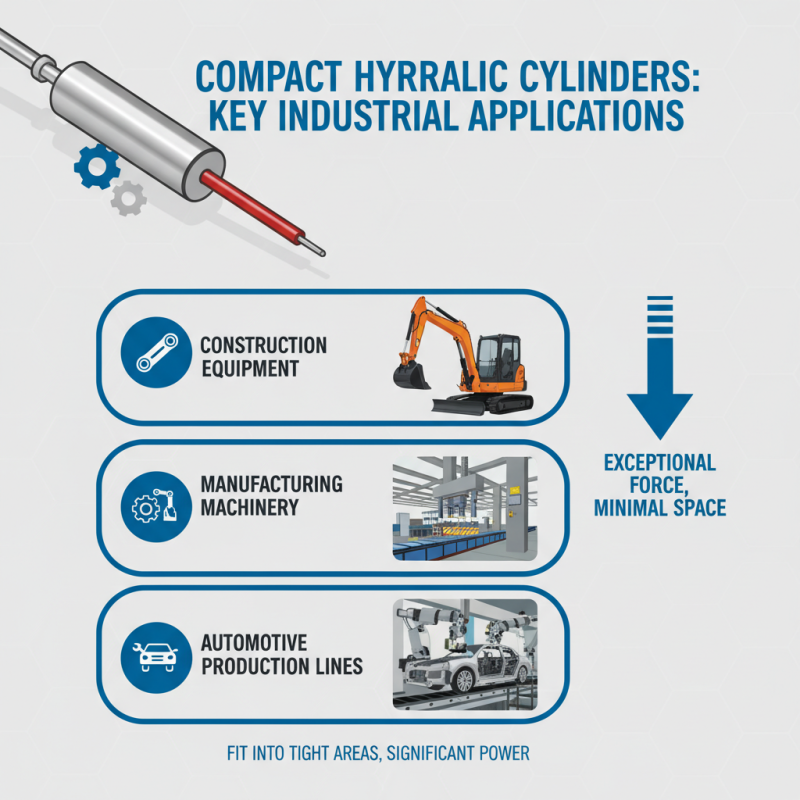
Compact hydraulic cylinders are essential in various industrial settings. They offer exceptional force in minimal space. These cylinders are often used in construction equipment, manufacturing machinery, and automotive production lines. Their small size means they can fit into tight areas while still providing significant power.
When using hydraulic cylinders, remember to maintain them regularly. Regular checks can prevent leaks and improve efficiency. Keep the area around the cylinder clean to avoid dirt buildup. Over time, improper maintenance can lead to larger issues. It's important to have a plan for routine inspections.
In addition to being space-saving, these cylinders enhance productivity. They can be adapted to many applications. However, using them incorrectly may create hazards. Ensure that the operator is trained to handle equipment safely. Training reduces the risk of accidents and can result in better performance overall.
Benefits of Using Compact Hydraulic Cylinders
Compact hydraulic cylinders are increasingly popular in various industries. Their design allows for powerful performance in a small space. This makes them ideal for applications where size constraints are critical. These cylinders can operate under high pressure while minimizing physical footprint. They can fit into tight spaces, enhancing machine design flexibility.
One key benefit of using compact hydraulic cylinders is their efficiency. They often require less hydraulic fluid, saving costs. Their lightweight structure contributes to lower energy consumption. However, some might overlook maintenance needs. Regular checks are vital to ensure longevity and prevent failures. Neglecting this aspect can lead to operational downtime.
Moreover, compact hydraulic cylinders are versatile. They can be used in lifting, pushing, and pulling tasks. Their adaptability makes them suitable for many applications. Yet, users can sometimes underestimate their load capacities. It’s crucial to assess weight limits properly. Misjudging this can be costly. Overall, these cylinders offer significant advantages, but informed usage is key.
Top Compact Hydraulic Cylinder Applications and Benefits Guide
| Application |
Description |
Benefits |
| Automotive Manufacturing |
Used for assembling, lifting, and moving components in car manufacturing. |
Increases efficiency and precision in production processes. |
| Construction Equipment |
Operates compact excavators and mini-loaders to perform various tasks. |
Enhances maneuverability and reduces overall equipment size. |
| Material Handling |
Facilitates lifting and lowering in warehouses and distribution centers. |
Improves safety and load management. |
| Agricultural Machinery |
Used in implements like planters, harrows, and tillers. |
Enhances efficiency in farming operations and reduces fatigue. |
| Packaging Industry |
Operates packing machines for precise product handling. |
Increases throughput and ensures consistent packaging quality. |
Comparison with Traditional Hydraulic Cylinders
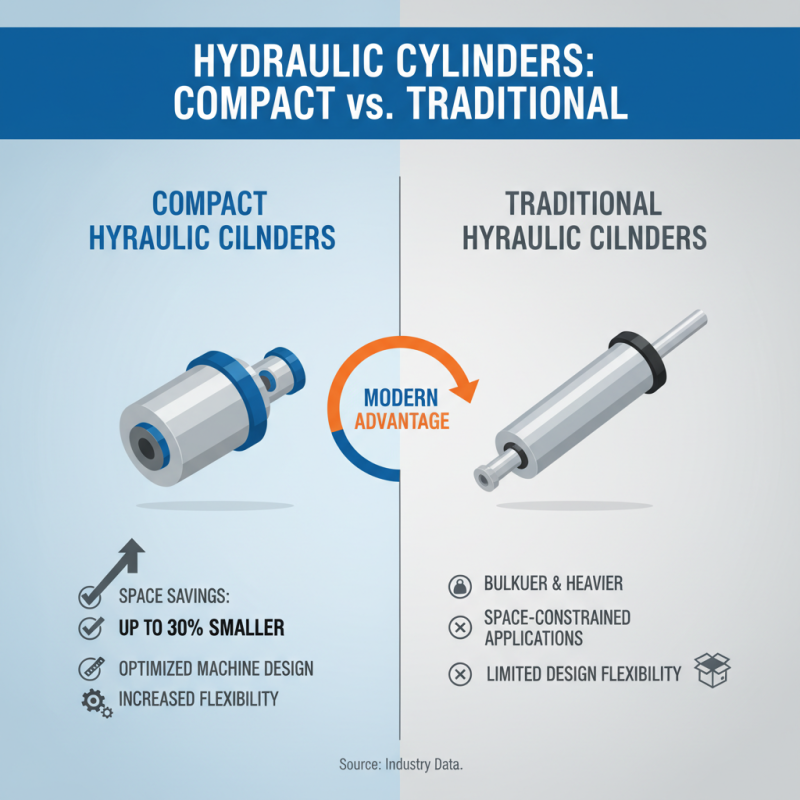
Compact hydraulic cylinders offer several advantages over traditional hydraulic cylinders. Traditional cylinders tend to be bulkier and heavier. This can lead to challenges in space-constrained applications. According to industry data, compact cylinders can save up to 30% in space compared to their traditional counterparts. This can optimize machine design and allow for greater flexibility in various applications.
In addition to saving space, compact hydraulic cylinders are often lighter. This reduced weight can improve the overall efficiency of machinery. They can achieve similar or even better performance with less input power. However, some users may overlook the importance of proper installation and maintenance. This can lead to performance issues over time.
Tip: Always check compatibility. Not all hydraulic systems work well with compact cylinders. A mismatch could cause inefficiencies or even damage. It’s essential to assess each project’s specific needs before making a switch. Consider the operational environment and load requirements carefully.
Overall, compact designs are beneficial, but they might not be suitable for every situation. Users should weigh the benefits against these potential downsides. Testing and feedback can lead to better decisions in application.
Future Trends in Compact Hydraulic Cylinder Design
The design of compact hydraulic cylinders is evolving. With the rise of automation and robotics, these cylinders are becoming more integral in various industries. A recent report indicates a 25% increase in compact cylinder demand within the manufacturing sector alone. This trend emphasizes the need for innovation.
One key aspect of future designs is lightweight materials. Advanced composites and aluminum alloys reduce the overall weight. This change can improve energy efficiency by 15%. Also, modular designs are gaining traction. They allow easy customization for applications in tight spaces. However, not all manufacturers embrace this shift. Some remain attached to traditional materials, risking obsolescence.
Tips: Consider asking manufacturers about their material choices. Evaluate their commitment to sustainable practices. Emphasizing durability is also critical. Expect to see features that enhance performance, such as integrated sensing technology. These innovations may push boundaries. Yet, some designs may be overly complex, leading to increased maintenance needs. Balancing innovation with simplicity is essential.

 +86-13349293098
 Contact WhatsApp
 Contact Email