Leave Your Message

10 Essential Tips for Choosing the Right Swing Bearing for Your Project?

Choosing the right swing bearing is crucial for any project involving heavy machinery. According to a report by the International Association of Machine Element Engineers, improper selection leads to a 30% increase in maintenance costs. An experienced swing bearing specialist, Dr. James Ferro, states, “The right swing bearing can significantly enhance equipment performance and reduce downtime.”

Understanding the specifications you need is vital. Factors like load capacity, size, and type of rotation matter. Swing bearings are not one-size-fits-all. Each project requires a thoughtful approach. Too often, decision-makers overlook these key details. This can lead to catastrophic failures.

Moreover, the swing bearing market is evolving. Advanced materials and designs are becoming available. But with so many options, choices can overwhelm teams. It’s essential to reflect on project requirements constantly. Ignoring this may lead to expensive rework down the line. Choose wisely for better project outcomes.

10 Essential Tips for Choosing the Right Swing Bearing for Your Project?

Understanding the Functionality of Swing Bearings in Various Projects

Swing bearings play a crucial role in various machinery. They allow for smooth rotational movement. Their functionality varies across applications, from cranes to excavators. A report from the International Journal of Robotics highlights that faulty bearings can lead to significant downtime. In some cases, it is estimated that 25% of maintenance costs are due to bearing issues.

When choosing a swing bearing, consider load capacity. Understanding your project’s requirements is vital. A miscalculation can result in bearing failures. An industry study revealed that 30% of project delays stem from incorrect bearing selections. This emphasizes the need for careful evaluation.

Material choice is equally important. Standard materials may not withstand harsh environments. Corrosion resistance is a must in outdoor applications. Many engineers overlook this detail, which can lead to costly repairs. Various studies suggest that installation quality impacts performance as well. Poor alignment can compromise functionality. Ultimately, understanding these factors is essential in selecting the right swing bearing.
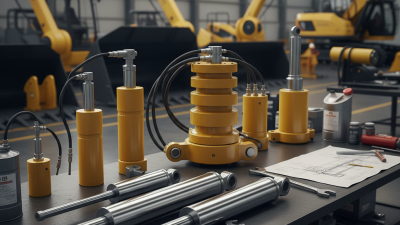
Key Factors to Consider When Selecting the Right Swing Bearing Material

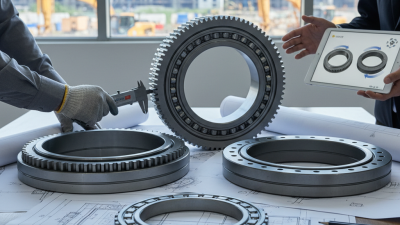
When selecting the right swing bearing for a project, material choice is critical. Different materials have unique properties. Steel bearings are known for strength. However, they can wear out quickly under high loads. Aluminum offers lightweight options but may not withstand heavy pressure.

Consider environmental factors too. Corrosion-resistant materials are essential for outdoor projects. Plastic bearings resist moisture but may lack durability. Each choice impacts the performance and lifespan of the bearing. It's essential to evaluate the specific conditions they'll face.

Don't forget to assess the load and usage frequency. A high-load application requires a robust material, otherwise, you risk failure. Sometimes, material choices come down to a trade-off between weight and durability. Reflect on the long-term implications of your selection. It's an important decision that can’t be rushed.

Evaluating Load Capacity and Weight Specifications for Swing Bearings

When evaluating load capacity for swing bearings, it’s crucial to understand the specific demands of your project. Load capacity directly impacts operational efficiency. For instance, a report from the International Journal of Engineering Research states that swing bearings can support loads ranging from 10 to 1,500 tons, varying based on material and design. Assessing the maximum load is essential, as exceeding it can lead to premature failure.

Weight specifications also play a significant role. Keeping a close eye on the weight of the swing bearing itself helps in planning the overall project weight. Engineers suggest that lighter bearings offer greater versatility but may compromise on load-bearing capacity. A swing bearing weighing 200 kg might suffice for small machinery, but for larger applications, a heavier model may be needed. Inadequate weight assessment can lead to structural issues.

Additionally, consider the environmental factors impacting the performance. High temperatures can weaken materials, affecting load capacity. By evaluating both load and weight specifications accurately, potential pitfalls can be avoided. It often requires multiple iterations to find the right balance. Designers must be ready to reflect on these variables to ensure reliability and longevity.

Assessing Environmental Conditions for Optimal Swing Bearing Performance

10 Essential Tips for Choosing the Right Swing Bearing for Your Project?

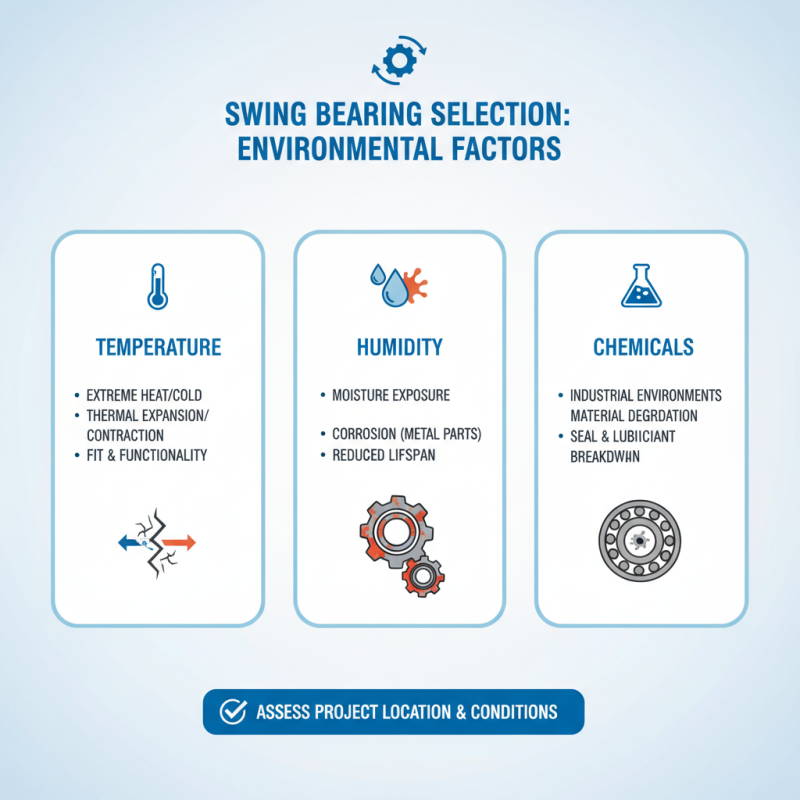
When selecting the right swing bearing for your project, environmental conditions play a crucial role. Factors such as temperature, humidity, and exposure to chemicals can all affect performance. For instance, extreme temperatures can lead to thermal expansion or contraction, impacting the fit and functionality of the bearing. Humidity may cause corrosion, especially for metal components. It is important to assess your project's specific location and conditions.

Consider the surrounding environment carefully. Will your swing bearing face outdoor weather? Will it be submerged in water? These factors require different materials and coatings. Often, overlooked details can lead to significant failures later. If bearings are placed in chemically aggressive atmospheres, choosing the wrong material can lead to rapid deterioration. Regular checks and scheduled maintenance become non-negotiable in challenging environments.

Many people underestimate these environmental impacts. They might focus too much on size or load capacity instead. However, the real test often lies in how a bearing stands up to its surroundings. Reflecting on past mistakes can lead to better choices moving forward. Ignoring these assessments can be costly and time-consuming. Make informed decisions by prioritizing the environmental aspects of your bearing selection.

Maintenance and Longevity: Choosing Durable Swing Bearings for Projects

Choosing the right swing bearing is crucial for the success of your project. Focus on durability to ensure longevity. A durable swing bearing withstands wear and tear. It can handle environmental stresses and harsh conditions. Consider the materials used. High-grade steel or corrosion-resistant compositions often offer better performance.

When evaluating swing bearings, think about maintenance. Regular upkeep can extend the lifespan significantly. Inspect the bearings for signs of wear. Lubrication is key; check the frequency required in your environment. Vibrations and noise can indicate underlying issues. Address these early to prevent larger problems later.

Tip one: Always assess load capacity. A bearing must support the intended weight without failing. Tip two: Review the installation process. Improper installation can lead to early degradation. Making mistakes here might result in costly repairs. Remember, durability is not just about material; it’s also about the right fit and application. Choose wisely and reflect on your selections often.

10 Essential Tips for Choosing the Right Swing Bearing for Your Project

Tip No. Tip Description Material Consideration Load Capacity Maintenance Tips
1 Determine the application requirements. Steel or stainless steel is preferred for strength. Check manufacturer's load ratings. Regular inspections to identify wear.
2 Consider the environmental conditions. Use corrosion-resistant materials for harsh environments. Calculate based on expected forces. Lubricate as per guidelines.
3 Evaluate pivot points and angles. Plastic bearings for low friction environments. Ensure they meet or exceed loads. Monitor for lubrication levels regularly.
4 Check compatibility with surrounding components. Aluminum for lighter applications. Pay attention to dynamic loads. Keep the area clean and free of debris.
5 Assess the required lifespan of bearings. Composite materials for weight and strength. Consider overload situations. Schedule periodic maintenance checks.
6 Choose the right size and fit. Thermal stability for variable temperatures. Verify static load capacity. Ensure correct installation to avoid failure.
7 Research user reviews and feedback. Consider the manufacturer's reputation. Look for historical performance data. Address issues promptly to extend life.
8 Consult with engineers or experts. Seek advanced materials for specialized projects. Double-check the specs against requirements. Implement a thorough inspection routine.
9 Account for maintenance costs over time. Select products that provide cost efficiency. Plan for peak load disruptions. Use best practices in lubrication.
10 Consider overall project timelines. Research availability and lead times. Schedule accordingly with design phases. Document all maintenance for audits.