Top Uses of Slewing Bearings in Modern Machinery and Industry?
Slewing bearings play a crucial role in modern machinery and industry. These components facilitate smooth rotational movement in various applications. According to a recent industry report by the Global Bearings Market Analysis, the demand for slewing bearings is projected to grow significantly. This growth highlights their importance in sectors like construction, renewable energy, and heavy machinery.
John Smith, a leading expert in bearing technology, stated, "Slewing bearings are essential for enhancing the efficiency of modern machines." This underscores their integral role in ensuring optimal performance. Applications range from cranes to wind turbines, each relying on these bearings for reliability.
Despite their advantages, challenges persist in the industry. Quality control and maintenance issues often arise and require attention. Not every manufacturer meets the highest standards. Addressing these challenges is vital for the continuous evolution of slewing bearing technology.
Top Uses of Slewing Bearings in Modern Machinery and Industry
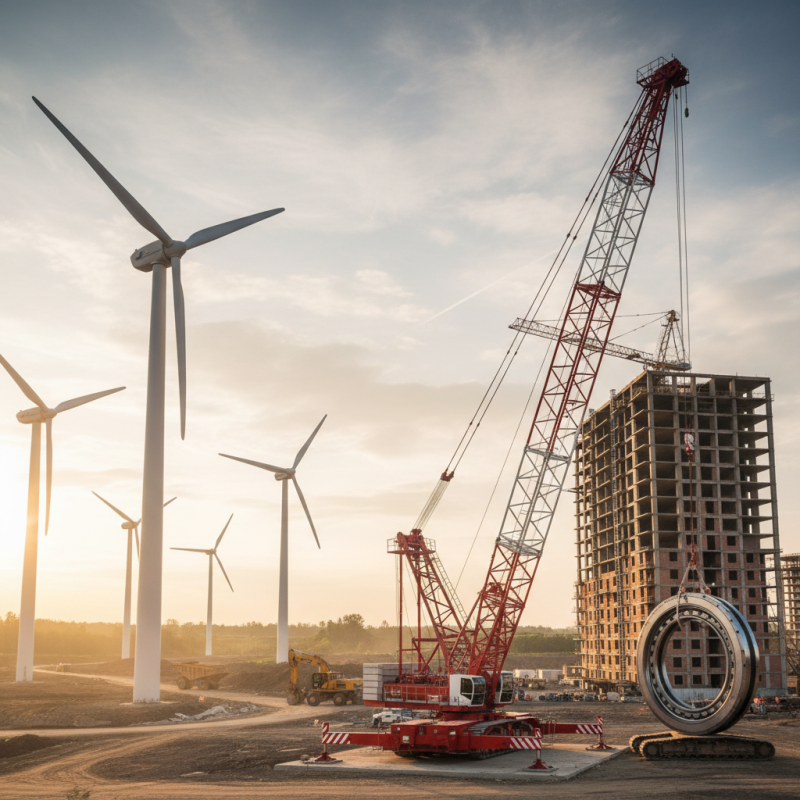
Slewing bearings are crucial components in various modern machinery applications. Their primary role is to facilitate rotational movement, especially in heavy loads. In construction equipment, these bearings support excavators, cranes, and mixing trucks. According to a report by MarketsandMarkets, the slewing bearing market is expected to grow from USD 3.5 billion in 2022 to USD 5.2 billion by 2027, highlighting the increasing demand in sectors like construction and renewable energy.
In the renewable energy sector, slewing bearings are vital for wind turbines. They help maintain stability and durability under challenging weather conditions. A study noted that wind turbine components could experience torque variations exceeding 300 kN. This demands reliability from each component, especially slewing bearings, which endure substantial stress. However, the market still faces challenges, including issues related to material fatigue and maintenance needs, which can lead to premature failure.
Another application area is in the marine industry. Slewing bearings are utilized in various vessels for crane operations and dynamic positioning systems. As ships grow larger, the demand for more robust slewing bearings increases. Yet, the complexity of marine environments can lead to unexpected failures. Understanding these limitations is essential. Regular inspections and advancements in material science are necessary to enhance performance and longevity in real-world applications.
Top Uses of Slewing Bearings in Modern Machinery and Industry
| Application |
Industry |
Key Features |
Benefits |
| Crane Joints |
Construction |
High load capacity, rotation capability |
Increased stability and improved lifting efficiency |
| Wind Turbines |
Energy |
Durability, ability to withstand harsh conditions |
Enhanced efficiency and lifespan of turbines |
| Medical Equipment |
Healthcare |
Precision movement, easy maintenance |
Improved reliability and patient outcomes |
| Robotic Arms |
Manufacturing |
High rotation precision, integrated design |
Increased productivity and accuracy in tasks |
| Excavators |
Construction |
Heavy-duty, multi-directional movement |
Improved terrain adaptability and operational flexibility |
Key Applications of Slewing Bearings in Construction Equipment
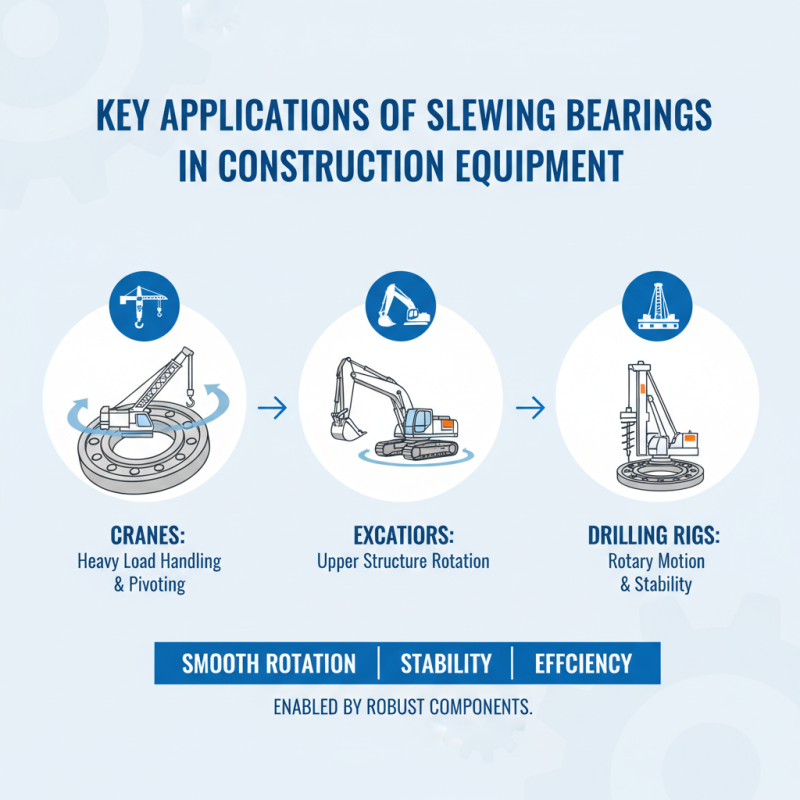
Slewing bearings play a crucial role in modern construction equipment. These robust components enable smooth rotation in machines like cranes, excavators, and drilling rigs. A crane, for example, relies on a slewing bearing to handle heavy loads while pivoting. This ensures stability and efficiency on job sites.
In excavators, slewing bearings allow for precise movement and positioning of the arm. This precision is vital for digging and lifting tasks. However, improper maintenance can lead to performance issues. Regular inspection and lubrication are necessary to prolong their lifespan.
Drilling rigs also benefit from slewing bearings. They ensure smooth operation while drilling deep into the earth. Without these bearings, equipment could experience excessive wear and tear. Maintenance challenges can arise in harsh environments, affecting performance. It’s essential to address these potential problems to keep machinery operational and safe.
Role of Slewing Bearings in Renewable Energy Systems
Slewing bearings play a critical role in renewable energy systems. They allow for smooth rotation in wind turbines and solar trackers. Their ability to handle heavy loads and withstand weather conditions makes them essential. Each component must work efficiently to harness energy effectively.
When selecting slewing bearings, consider the environment. Moisture and dust can impact performance. Regular maintenance is vital to avoid failures. Neglecting upkeep can lead to costly downtimes. For best results, use lubricants specifically designed for your equipment.
Keep an eye on the load capacity. Overloading can significantly reduce bearing life. It is important to analyze operational requirements carefully. Sometimes, a too-small bearing is chosen due to budget constraints. This can later result in unexpected issues, like vibrations and misalignment. Always assess the long-term impacts of choices made today.
Impact of Slewing Bearings on Industrial Automation Efficiency
Slewing bearings play a critical role in enhancing industrial automation efficiency. These components allow smooth rotation and precision in various machines.
For example, in cranes, they enable 360-degree movement. This is vital for timely lifting and transporting heavy loads. Improved motion leads to increased productivity and reduced operational delays.
In assembly lines, slewing bearings contribute to robotic arms' effectiveness. They ensure accurate positioning and coordination, minimizing errors in manufacturing.
However, not all systems benefit equally. Some designs may face wear and tear, leading to downtime. Regular maintenance is crucial for sustained efficiency.
Automation systems must consider various factors impacting slewing bearing performance. Load limits, lubrication, and installation practices can affect their longevity.
Ignoring these elements can lead to unexpected failures. Industry players need to balance innovation with these realities for optimal outcomes. Regular assessments will help organizations
harness the full potential of slewing bearings.
Advancements in Slewing Bearing Technology and Future Trends
Slewing bearings are critical components in many modern machines. They provide support and enable smooth rotation or linear movement. As industries evolve, so do slewing bearing technologies. New materials and designs enhance performance and durability under heavy loads. This progression leads to higher efficiency in cranes, excavators, and wind turbines.
Recent advancements focus on reducing friction and wear. Improved lubrication systems extend the lifespan of these bearings. Nonetheless, some challenges remain. Adapting to extreme environmental conditions can still be tricky. Engineers must constantly seek innovative solutions to these ongoing issues.
Future trends hint at the integration of smart technologies. Sensors might allow for real-time monitoring of bearing conditions. This could prevent failures and improve maintenance routines. The path ahead seems promising, but careful consideration is crucial. Balancing innovation with reliability often poses a dilemma for manufacturers. Striking that balance is essential for continued success in the industry.

 +86-13349293098
 Contact WhatsApp
 Contact Email