What Is a Hydraulic Cylinder Shaft?
A Hydraulic Cylinder Shaft is the working member that transfers hydraulic pressure into controlled mechanical movement. In many industrial cylinders, this shaft is better known as the piston rod. It extends from the cylinder barrel, passes through the gland, and connects with the machine’s moving structure. When pressurized oil pushes the piston, the shaft delivers force through its polished surface and threaded or clevis-mounted end.
Its design affects strength, alignment, sealing, and service life. Engineers usually consider shaft diameter, material grade, surface hardness, chrome plating, buckling resistance, and load direction. A construction excavator may expose the shaft to mud, impact, and side loading. A factory press may demand precise, repeated strokes with little visible contamination. During inspection, technicians often look for scoring, rust spots, bent sections, oil leakage, and damaged threads. Small marks can become serious seal problems.
The terminology is not always consistent. Some suppliers call the component a shaft, rod, or ram, although these terms can describe different parts. That distinction deserves attention. A shaft that appears oversized may still fail under poor alignment or unexpected side force. I have seen maintenance decisions focus on diameter while ignoring surface condition and mounting geometry. That approach is incomplete. Understanding the Hydraulic Cylinder Shaft requires more than identifying its shape. It means examining how pressure, load, lubrication, sealing, and operating conditions interact. This article explains its structure, purpose, common materials, failure signs, and practical maintenance considerations.
Definition and Role of a Hydraulic Cylinder Shaft
What Is a Hydraulic Cylinder Shaft?
Definition and Role of a Hydraulic Cylinder Shaft
A hydraulic cylinder shaft, often called a piston rod, is the moving steel component inside a hydraulic cylinder. It transfers hydraulic pressure into linear mechanical force. When pressurized fluid pushes the piston, the shaft extends or retracts. This movement may lift, clamp, tilt, or push heavy equipment.
The shaft must resist bending, surface wear, and repeated impact. Its polished surface passes through a seal, so even a small scratch can cause leakage. Many shafts use corrosion-resistant coatings or treated steel surfaces. In field inspections, technicians often check for scoring, rust, uneven wear, and visible bending. A shaft can look sound yet leak under pressure. No inspection method is perfect. Shaft sizing is sometimes treated as an afterthought, and that mistake can shorten cylinder life. Correct diameter, stroke length, mounting alignment, and load direction all matter.
Tips: Keep the shaft clean before operation. Small damage matters. Inspect exposed areas after dusty or wet work. Measure alignment before replacing a cylinder. Avoid using the shaft as a support point during maintenance. Follow the cylinder manufacturer’s pressure and inspection requirements. If movement becomes jerky, stop and investigate rather than increasing system pressure. A simple seal replacement may not solve the real problem.
Main Parts and Materials of the Shaft
What Is a Hydraulic Cylinder Shaft?
Main Parts and Materials of the Shaft
A hydraulic cylinder shaft, often called a piston rod, transfers force from the piston to an external load. Its rod body must resist bending, fatigue, and surface wear during repeated movement. The polished working surface passes through the gland and seals. Small damage matters. A shallow scratch can cut a seal and create an oil leak.
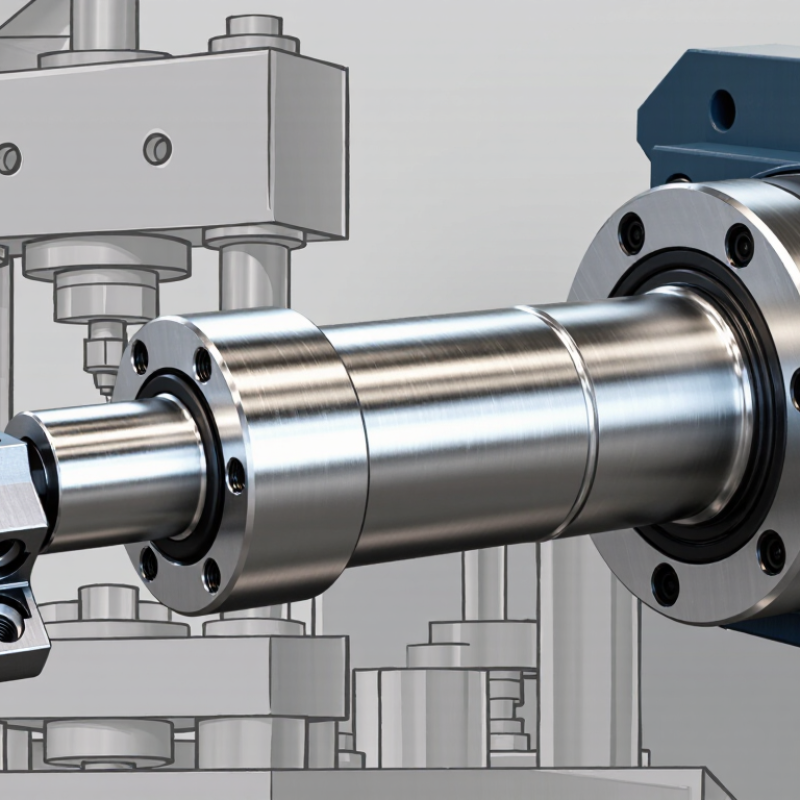
The shaft includes several functional areas. The piston end usually has threads, a shoulder, or a retaining groove. These features secure the piston and support accurate alignment. The outer end may use a threaded tip, rod eye, clevis, or spherical joint. The gland contact zone needs a smooth, hardened finish. That area sees constant friction. Protective coatings help resist corrosion, but coating thickness must remain controlled. Too much material can affect seal fit.
Material choice depends on load, environment, and maintenance conditions. Medium-carbon steel suits many general cylinders after heat treatment. Alloy steel offers higher strength for heavy loads and shock. Stainless steel works well near moisture, chemicals, or frequent washing, although it costs more. Hard chrome, nickel-based coatings, and engineered finishes can improve wear resistance. Technicians should check straightness, diameter, surface roughness, and thread damage during inspection. A stronger shaft can still fail when alignment is poor. Material selection is not always perfect. Real operating conditions may expose weaknesses that laboratory testing misses.
How the Shaft Works Inside a Hydraulic Cylinder
What Is a Hydraulic Cylinder Shaft?
The hydraulic cylinder shaft, often called the piston rod, carries force outside the cylinder. Inside, pressurized oil pushes against the piston. The piston then drives the shaft through the rod seal and guide. A 50 mm piston area under 20 MPa can produce about 100 kN of theoretical force. Real output is lower because of friction, leakage, and pressure losses. The shaft moves only when fluid enters the correct chamber. Directional valves control that movement. Small flow changes can noticeably affect speed.
A polished shaft surface protects the seal during repeated strokes. Chrome plating or other hardened finishes resist wear and corrosion. The guide bushing keeps the shaft centered, but it cannot correct serious side loading. When a machine applies an offset load, the shaft may bend or the seal may wear unevenly. That failure often looks like a fluid problem. It is not always one. Industry analysis from Research and Markets in 2024 projects roughly 4% annual growth for the hydraulic cylinder market, increasing attention on service life and efficiency. Technical guidance from ISO 6020 and ISO 6022 also emphasizes standardized dimensions and operating limits. In practice, those limits deserve caution. A cylinder can survive a test load, yet fail early under vibration, contamination, or poor alignment. Measuring rod runout during maintenance is simple, but it is often skipped.
Common Shaft Designs and Applications
What Is a Hydraulic Cylinder Shaft?
Common Shaft Designs and Applications
A hydraulic cylinder shaft, often called a piston rod, transfers force from the piston to a moving machine part. Its design affects strength, sealing, service life, and safety. Most shafts use polished steel with a hard chrome or corrosion-resistant surface. This finish reduces friction and helps protect the rod from moisture, dust, and minor scratches.
Different applications need different shaft designs. Standard solid rods suit excavators, agricultural equipment, and lifting platforms. Stainless steel rods perform better in wet processing areas and marine environments. Induction-hardened rods resist impact and surface wear in heavy construction work. Hollow shafts can reduce weight, but they need careful stress calculations. A poorly selected hollow design may bend under repeated loads.
Details matter.
The shaft diameter must handle compression, tension, and possible buckling. Engineers also check side loading, stroke length, mounting alignment, and seal compatibility. In material-handling systems, a hardened surface can help manage frequent cycles. In manufacturing machinery, a smoother finish may reduce seal wear and leakage.
Field inspections often reveal a simple problem: dirt enters through a damaged wiper seal. That small issue can ruin an otherwise strong shaft. No design is perfect. Regular cleaning, alignment checks, and timely seal replacement remain essential. Even a robust shaft can fail when the cylinder works beyond its rated load.
Maintenance Issues and Shaft Failure Prevention
A hydraulic cylinder shaft, often called the rod, transfers hydraulic force to a moving load. It extends through the cylinder head and works near seals, bearings, and wipers. Its polished surface is not decorative. It controls friction and protects the sealing system. In field inspections, small damage often appears before major leakage. A thin rust line, a dull wear band, or side scoring deserves attention. Ignore it, and pressure can push contamination deeper into the cylinder.
Common failures include rod bending, pitting, seal extrusion, and uneven wear. Excessive side loading is a frequent cause, especially when a machine linkage is misaligned.
Dirt on the exposed rod can cut the wiper during retraction. Water may remain around the gland after washing and start corrosion overnight. Check the rod with clean gloves and a bright light.
Measure suspected bends with a straightedge or dial indicator. Do not polish away deep pits without checking rod diameter and surface finish. That shortcut may create a worse seal. Sometimes, the seal is blamed when mounting geometry causes the leak.
Tips:
Keep the rod clean and lightly protected during storage. Inspect seals after unusual impacts or pressure changes. Confirm mounting pins move freely and grease them as specified.
Replace damaged wipers early. Record leakage, temperature, load, and operating hours. These details help separate a seal problem from a structural fault.
Stop operation when a crack, severe scoring, or visible bend appears. Safety matters. Use rated supports, release hydraulic pressure, and follow the equipment service procedure before inspection.

 +86-13349293098
 Contact WhatsApp
 Contact Email