How to Choose the Right Swing Bearing for Your Needs?
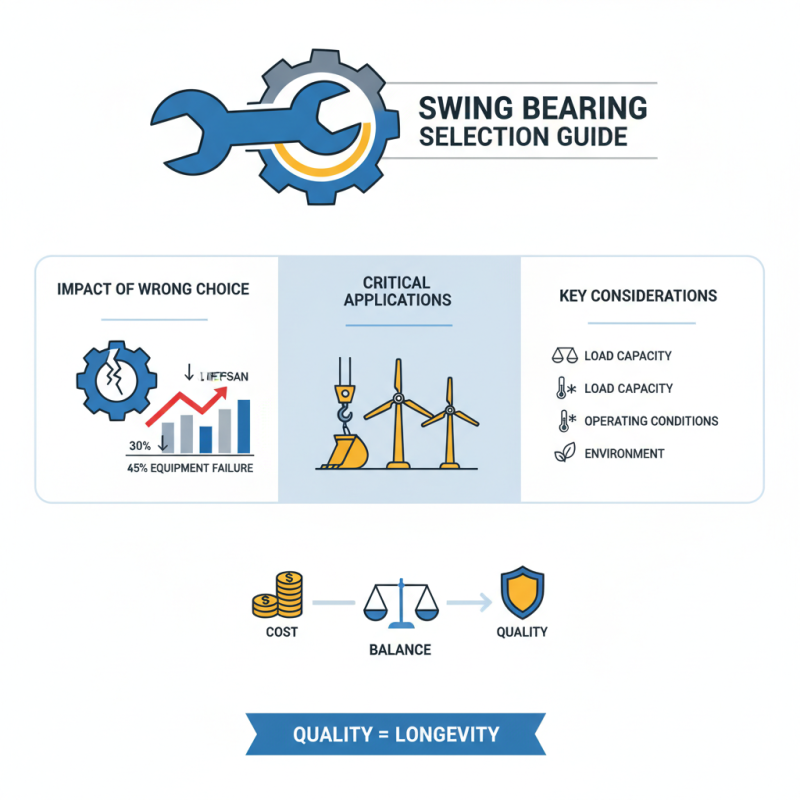
Choosing the right swing bearing can profoundly impact equipment performance and durability. A study by the International Journal of Engineering reveals that improper selection may lead to a 30% decrease in machinery lifespan. This highlights the importance of careful consideration when selecting swing bearings. The right choice ensures smooth operation and minimizes maintenance costs.
Swing bearings are critical components in several applications, including cranes, excavators, and wind turbines. They bear heavy loads and endure dynamic movements. Industry reports indicate that 45% of equipment failures are linked to bearing issues. Thus, understanding the requirements of your application is essential.
Take time to assess factors like load capacity, operating conditions, and environmental factors. In some cases, there can be a trade-off between cost and quality. It is crucial to balance these elements to avoid potential failures. Ignoring these may lead to costly repairs or replacements in the future. Your choice of swing bearing should reflect a commitment to quality and longevity.
Understanding the Different Types of Swing Bearings in the Market
Swing bearings are crucial components in various machinery and applications, offering support and rotational movement. Understanding the different types of swing bearings available is vital for making an informed choice.
There are several types:
plain bearings,
roller bearings, and
ball bearings.
Each type has unique characteristics, suited for specific applications.
Plain bearings are often used in heavy machinery. They provide stability and can handle high loads.
Roller bearings, on the other hand, are more efficient in transferring loads and can accommodate moderate speeds.
Ball bearings tend to be popular due to their versatility and ability to reduce friction. Choosing the right type depends on your specific operational needs.
Consider factors such as
load capacity,
speed, and
environmental conditions. Each bearing type has its limitations.
For instance,
ball bearings excel in low-load, high-speed scenarios, while
roller bearings perform better under high-load conditions. Recognizing these details can help you avoid costly mistakes and ensure optimal performance of your machinery.
Key Factors to Consider When Selecting a Swing Bearing
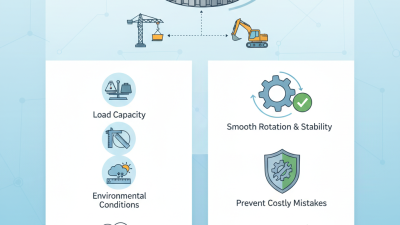
Choosing the right swing bearing is crucial for operational efficiency. Several key factors influence this decision. Load capacity is one of the primary considerations. According to industry reports, approximately 25% of swing bearing failures stem from exceeding load limits. Understanding the weight and load distribution of your machinery ensures safety and longevity.
Another vital factor is the operating environment. Swing bearings often endure harsh conditions. Factors such as temperature fluctuations, moisture, and contamination play a significant role. A study by the International Organization for Standardization notes that around 30% of premature failures occur due to environmental stressors. Selecting bearings with proper seals and materials can mitigate these risks.
Finally, consider the installation and maintenance aspects. Proper alignment during installation is essential. Misalignment can lead to uneven wear and premature failure. Regular inspections help identify issues before they escalate. According to an industry survey, 40% of maintenance professionals report that proactive monitoring extends bearing life. Balancing these elements effectively enhances performance and reliability.
How to Choose the Right Swing Bearing for Your Needs? - Key Factors to Consider When Selecting a Swing Bearing
| Dimension |
Material |
Load Capacity (tons) |
Working Temperature (°C) |
Application |
| 200 mm |
Steel |
5 |
-20 to 80 |
Construction Machinery |
| 300 mm |
Aluminum |
3 |
-10 to 90 |
Aerospace |
| 400 mm |
Plastic |
2 |
-30 to 70 |
Food Industry |
| 500 mm |
Stainless Steel |
8 |
-40 to 100 |
Marine Applications |
The Importance of Load Capacity in Swing Bearing Selection
When selecting a swing bearing, load capacity is a crucial factor. It determines how much weight the bearing can support without failure. Choosing a swing bearing with insufficient load capacity can lead to premature wear or catastrophic failure. This can disrupt operations and result in costly downtime. Understanding the specific application and the forces involved is essential for making the right choice.
Consider the types of loads your equipment will encounter. Static loads differ from dynamic loads, and both require careful assessment. If a bearing is overstressed, it may lead to increased friction and heat. This is a common oversight in selection processes. Inspecting load ratings on specifications is not enough; real-world conditions must be accounted for. The environment, such as temperature and moisture, also plays a significant role.
A reliable swing bearing should provide a safety margin in its load capacity. This extra buffer allows for unexpected stress and ensures longevity. Engineers need to evaluate all these factors thoroughly. Skipping detailed analysis can result in failure. Review case studies or expert insights if available. It fosters a deeper understanding of the complexities involved in swing bearing selection.
Evaluating Cost vs. Performance in Swing Bearing Choices
Choosing the right swing bearing involves understanding the balance between cost and performance. Numerous reports indicate that the lifecycle cost significantly impacts decision-making. In heavy machinery, the initial purchase price can be tempting, but it's the long-term performance that ultimately matters. A quality swing bearing may cost more upfront, but it can reduce maintenance expenses by up to 30% over time.
When evaluating options, consider the load capacity, fatigue strength, and wear resistance of the bearings. According to industry studies, bearings rated for heavy loads often show extended service life. However, they come with a higher price tag. Weighing these factors requires careful analysis of your specific needs.
Tip: Think about your operational environment. If conditions are harsh, investing in a
high-performance bearing is wise.
Not every swing bearing meets the same standards. Unexpected failures can arise from inadequate specifications. Conducting thorough research before a purchase can prevent costly mistakes.
Tip: Consult with
industry experts. Their insights can guide you toward the best choice for your applications.
Ultimately, assessing
cost against
performance is nuanced. It's essential to reflect on your equipment's requirements and potential challenges. Misjudging these factors can lead to
regret down the line.

 +86-13349293098
 Contact WhatsApp
 Contact Email