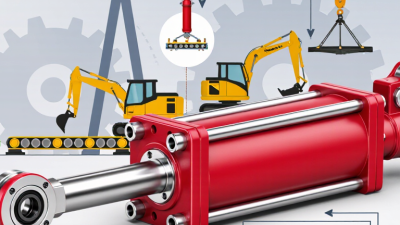
Top 10 Compact Hydraulic Cylinder Manufacturers Worldwide?
Compact hydraulic cylinders are small in size, but their engineering demands are rarely small. They must deliver reliable force inside tight spaces, often beneath mobile equipment, factory tooling, agricultural machinery, and automated production lines. A few millimeters of misalignment can cause seal wear, uneven loading, or premature failure.
Anthony Esposito, a recognized fluid-power author and educator, expressed a useful engineering principle: “Hydraulic power is controlled force, not force alone.” That idea guides this review of the Top 10 Compact Hydraulic Cylinder Manufacturers Worldwide. The ranking considers manufacturing experience, material quality, pressure performance, sealing systems, customization, testing practices, and after-sales support. It also considers practical details, including bore size, stroke length, mounting style, corrosion resistance, and operating temperature.
A compact design is not automatically a better design. That needs repeating. Some manufacturers excel in high-volume standard cylinders, while others are stronger in custom dimensions, welded construction, or demanding mobile applications. Buyers should examine load cycles, fluid compatibility, side-load exposure, and available spare parts before choosing a supplier.
The companies featured here represent different strengths. Some invest heavily in precision machining and automated testing. Others stand out through engineering support, regional service networks, or flexible production. No single manufacturer is ideal for every project. That is where this comparison becomes useful. It connects technical capability with real-world purchasing decisions, while acknowledging one uncomfortable truth: published specifications do not always reveal long-term field performance.
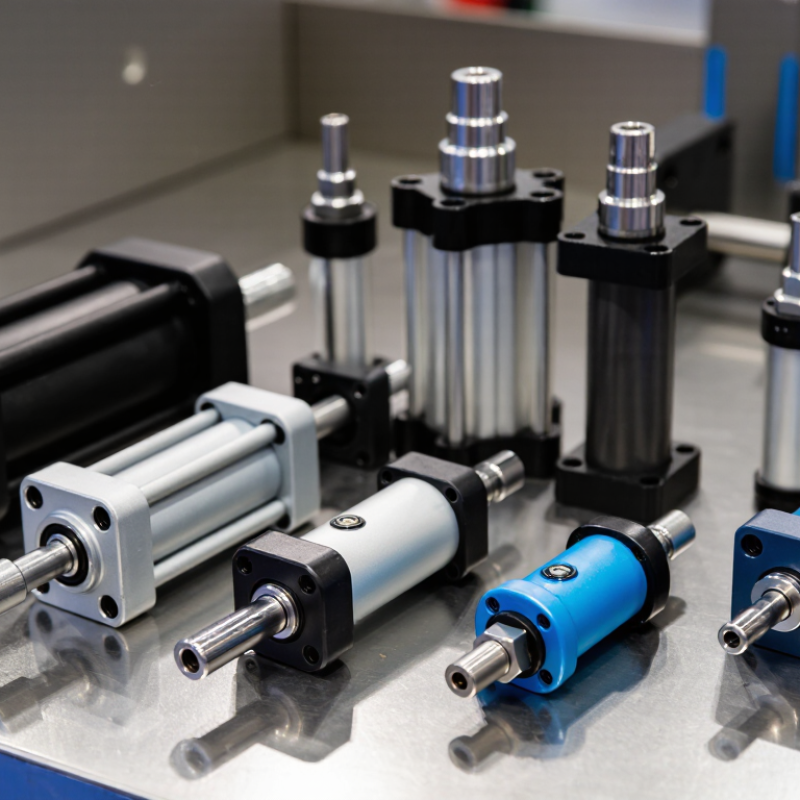
Compact Hydraulic Cylinders: 700-Bar Ratings, Bore Sizes, and ISO Standards
Compact hydraulic cylinders are judged by force, envelope, and safety margin. A 700-bar rating equals approximately 10,000 psi, but it does not guarantee suitability for every duty cycle. At this pressure, a 50 mm bore produces about 137 kN of theoretical force before friction and pressure losses. Rod diameter, stroke length, mounting geometry, and side loading can change the result sharply.
Bore sizes commonly range from roughly 25 mm to more than 200 mm across compact industrial designs. Smaller bores fit restricted machinery, while larger bores deliver greater force but increase weight and oil volume. ISO 6020/2 covers medium-duty hydraulic cylinders, while ISO 6022 addresses heavy-duty dimensions and mounting practices. ISO 4413 also guides hydraulic-system safety, including pressure control and hose protection. Standards help comparison, but they do not replace application testing.
Industry reports support this demand. Grand View Research identifies construction, agriculture, and industrial equipment as major hydraulic-cylinder applications. MarketsandMarkets also links market growth to automation and mobile equipment development. However, “top 10” manufacturer rankings can be incomplete when they rely on visibility rather than failure-rate data. In practice, request fatigue-test results, pressure-test records, seal specifications, and traceable material certificates. One detail is often missed: compact does not mean maintenance-free. Contamination, misalignment, and heat can shorten service life considerably. Manufacturer claims deserve verification.
Ranking Criteria: Pressure, Stroke, Cycle Life, Certifications, and Reach
Top 10 Compact Hydraulic Cylinder Manufacturers Worldwide?
A credible top-10 ranking should measure performance, not catalog size. The 2024 MarketsandMarkets report estimates the global hydraulic cylinder market at about USD 15 billion, with industrial automation driving demand for smaller, faster actuators. Pressure rating matters first. Compact cylinders should sustain their rated pressure without excessive heat, seal leakage, or rod deflection. Stroke accuracy also deserves attention. A five-millimeter error can disrupt clamping, lifting, or material handling.
Cycle life reveals manufacturing quality. Test evidence should show repeated operation under realistic loads, not only laboratory conditions. ISO 6020/2 and ISO 6022 provide useful dimensional and pressure references for metric cylinders. Certification records strengthen trust. ISO 9001 supports process control, while CE documentation and applicable machinery standards help confirm market readiness. However, certificates alone do not prove durability.
Supplier reach should include regional inventory, technical support, spare seals, and repair response. The 2023 Grand View Research analysis identifies construction, agriculture, and industrial equipment as major hydraulic-cylinder demand sectors. That makes service coverage practical, not decorative. A strong manufacturer should publish pressure curves, stroke tolerances, fatigue results, and inspection methods. Some rankings still rely heavily on revenue. That is convenient, but incomplete. Field experience often exposes weaknesses that brochures hide. Cycle-life data may also be inconsistent across suppliers, so buyers should request comparable test conditions.
Top 10 Manufacturers: Product Lines, OEM Sectors, and Global Coverage
A practical review of the top 10 compact hydraulic cylinder manufacturers should examine more than production volume. Their product lines commonly include single-acting and double-acting cylinders, welded bodies, tie-rod designs, and custom miniature units. Buyers should check bore size, stroke length, working pressure, mounting style, seal material, and port configuration. Small differences matter when a cylinder operates beneath a loader arm or inside a factory fixture.
Their OEM sectors cover agricultural machinery, compact construction equipment, forklifts, aerial platforms, waste systems, and industrial automation. Some manufacturers provide standard cylinders for faster replacement. Others engineer complete hydraulic assemblies around a customer’s drawings. Useful evidence includes pressure-cycle testing, corrosion testing, dimensional inspection, and traceable material records. Service teams should also explain seal selection for cold warehouses, dusty farms, or high-temperature production lines.
Global coverage separates capable suppliers from merely visible ones. The strongest manufacturers usually combine regional distributors, technical support, spare-part warehouses, and localized machining or assembly. This shortens delivery time and simplifies warranty handling. However, no top-ten list fits every application. A supplier with excellent custom engineering may have limited local inventory. Another may offer broad catalog coverage but weaker field support. That trade-off deserves honest attention. My assessment would also consider communication speed, prototype support, documentation quality, and the manufacturer's willingness to revise an imperfect design.
Buyer Verification: ISO 9001 Evidence, Warranty Terms, and Total Cost
When comparing the top 10 compact hydraulic cylinder manufacturers worldwide, buyer verification should begin with evidence, not advertising. Ask for a current ISO 9001 certificate showing the legal manufacturing site and certification scope. Check its issuing body and validity date. A certificate alone proves process control, not perfect cylinder performance. Request inspection records, pressure-test results, material traceability, and sample dimensional reports. In my experience, suppliers with clear records answer technical questions faster. Some documents still look incomplete.
Warranty terms deserve close reading. Confirm coverage length, excluded parts, response times, and responsibility for transport. Ask whether seals, rods, and machining defects receive equal protection. A short warranty may indicate risk, but a long warranty can hide strict conditions. Request written procedures for failure analysis and replacement approval. Keep every promise in the quotation or contract.
Tips: Calculate total cost before choosing the lowest unit price. Include tooling, freight, installation, spare seals, downtime, and expected maintenance. Compare the cylinder’s rated pressure with your real operating cycle, not only the catalog maximum. Ask for cycle-life data under similar loads and temperatures. A cheaper cylinder may require earlier replacement. I once saw a small saving disappear after repeated seal changes, which was a useful warning. Evaluate communication quality, testing discipline, and delivery consistency alongside price. A practical factory visit or third-party inspection can reveal details that certificates cannot.
Top 10 Compact Hydraulic Cylinder Manufacturers Worldwide?
Buyer Verification: ISO 9001 Evidence, Warranty Terms, and Total Cost
This buyer-side comparison uses measurable verification criteria rather than unverified company rankings. ISO 9001 documentation should include a valid certificate, certification scope, issuing body, certificate number, and expiry date. Warranty review should confirm duration, coverage, exclusions, claim procedure, and responsibility for freight. Total cost should include purchase price, installation, maintenance, downtime risk, replacement parts, and logistics.

 +86-13349293098
 Contact WhatsApp
 Contact Email