+86-13349293098


Choosing reliable Agricultural Cylinders suppliers in China requires more than comparing prices or browsing polished product catalogues. Global buyers must examine material quality, sealing performance, production experience, and after-sales support. A cylinder may look simple, yet a failed rod seal can stop a harvester during a narrow harvesting window. That delay can cost far more than the original purchase.
Hydraulic systems educator and author Andrew Parr wrote, “Hydraulic systems are used where high power density is required.” This principle explains why Agricultural Cylinders remain essential in tractors, combines, sprayers, loaders, and irrigation equipment. Chinese manufacturers increasingly offer custom bore sizes, chrome-plated rods, welded or tie-rod designs, and corrosion-resistant finishes. Strong suppliers should also provide pressure testing, dimensional reports, traceable materials, and clear drawings before production begins.
Trust still needs evidence. A factory visit helps, but it does not replace independent testing or long-term field feedback. Some suppliers communicate quickly yet struggle with consistent tolerances. Others have excellent machining equipment but limited export experience. That difference matters. Buyers should ask about ISO systems, seal brands, fatigue testing, packaging protection, and warranty procedures. Small details reveal practical competence. For example, capped ports and rust-preventive wrapping can protect cylinders during months at sea. Not every supplier will meet every application perfectly. That is the uncomfortable part. Careful buyers should compare technical documents, sample performance, and customer references before choosing among China’s top Agricultural Cylinders suppliers for global agricultural machinery markets.
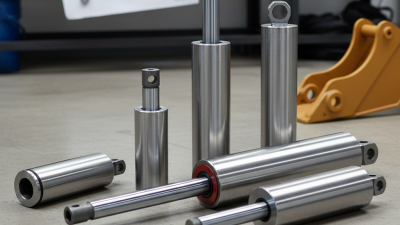
Agricultural cylinders convert hydraulic pressure into controlled linear movement. They raise, lower, push, pull, or tilt equipment during demanding field work. Single-acting cylinders use pressure in one direction, while gravity or a spring returns the rod. Double-acting cylinders provide powered movement both ways. Telescopic cylinders extend through several stages, making them useful where installation space is limited.
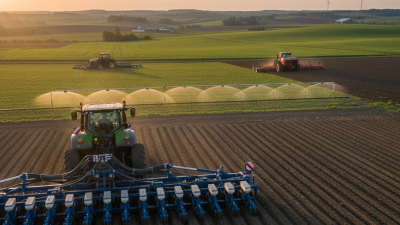
Different machines need different cylinder designs. Tractors use cylinders for three-point hitches, steering systems, and loader arms. Harvesters depend on them for header adjustment, unloading systems, and protective covers. Sprayers use compact cylinders to fold booms and adjust ground clearance. Irrigation equipment may require corrosion-resistant cylinders because water, fertilizer residue, and dust attack exposed surfaces. Orchard machinery often needs short-stroke cylinders with precise control.
From practical equipment inspections, rod alignment and seal quality strongly affect service life. A cylinder can appear powerful but still fail early when side loading is ignored. It is not only about pressure. Buyers should check bore size, stroke length, mounting style, operating pressure, rod coating, seal materials, and replacement availability. Manufacturing records, pressure testing, dimensional reports, and traceable materials improve purchasing reliability. Welded cylinders often suit heavy agricultural frames, while tie-rod designs can simplify maintenance. Field conditions disagree. A perfect specification rarely exists, and designers may need to revise calculations after observing soil, temperature, and duty-cycle changes.
China’s Leading Agricultural Cylinder Manufacturing Regions
China’s agricultural cylinder supply is concentrated near established machinery clusters. Shandong combines forging, tube processing, welding, and large-scale machining. Its inland factories often support tractors, harvesters, and irrigation equipment. Jiangsu offers stronger precision machining and convenient coastal logistics. Zhejiang is known for compact component production and export-oriented workshops.
Regional capacity follows agricultural demand. China’s Ministry of Agriculture and Rural Affairs reported a 73.6% mechanization rate for crop cultivation and harvesting in 2022. China Statistical Yearbook 2024 recorded more than 1.1 billion kilowatts of agricultural machinery power in 2023. These figures help explain sustained demand for durable hydraulic cylinders, especially in Shandong and Jiangsu. Cylinder buyers should check bore tolerance, rod coating, seal compatibility, and pressure-test records. Traceability matters.
Hebei and Henan also deserve attention for heavy fabrication and cost-sensitive production. However, lower pricing can hide differences in steel control, welding consistency, and inspection frequency. A regional map cannot replace a factory audit. Some supplier directories blur assembly capacity with true manufacturing depth. That distinction matters. Request material certificates, sample test data, drawing revisions, and batch-level pressure results. The best sourcing decision may not come from the largest cluster. It may come from the supplier that documents every critical process clearly.
Agricultural machinery power is used as a regional demand indicator for agricultural hydraulic cylinders. The highlighted provinces are widely recognized machinery and hydraulic-equipment production bases.
Shandong, Henan, Jiangsu, Heilongjiang, Anhui, Hubei, Sichuan, and Xinjiang combine large agricultural machinery fleets with established equipment-manufacturing networks. These factors make them important sourcing regions for agricultural hydraulic cylinders, including steering, lifting, tipping, and implement cylinders. The figures represent total agricultural machinery power and are not company-level sales data.
Chinese agricultural cylinder suppliers should be evaluated through evidence, not attractive catalogs. The OECD-FAO Agricultural Outlook 2024-2033 forecasts agricultural and fish production to grow about 1.1% annually. That growth increases demand for reliable hydraulic components. Ask suppliers for production records, material certificates, and traceable inspection results. Confirm whether cylinders follow ISO 6020/2 dimensions and ISO 4413 hydraulic safety principles.
Standards matter.
Request a sample cylinder before signing a large order. Inspect the chrome-plated rod under direct light. Small scratches can become leakage points after field use. Check weld penetration, tube straightness, seal materials, and port accuracy. Ask for pressure, endurance, cleanliness, and salt-spray test reports. Test the cylinder with the same oil, temperature range, and mounting angle used on your equipment. A factory video is useful, but it is not proof.
Supplier capacity also needs careful checking. Compare monthly output with actual machining equipment, trained technicians, and subcontracting controls. Ask how rejected parts are isolated and recorded. Response time matters when a machine stops during harvest. Request recent export references, but verify them independently. A low quotation may hide weaker seals, thinner coatings, or inconsistent tolerances. I have found that paperwork can look perfect while packaging remains careless. That should trigger a second audit, not immediate rejection. According to the OECD-FAO report, efficiency gains will support future production growth, making dependable cylinder performance increasingly important.
China Top Agricultural Cylinders Suppliers for Global Buyers
Quality Standards, Customization, and Production Capabilities
Agricultural cylinders face mud, vibration, water, and uneven loads. Reliable suppliers design for these conditions, not only for clean factory tests. Buyers should request material certificates, dimensional records, welding procedures, and pressure-test results. A traceable serial number helps connect each cylinder with its inspection history. Surface treatment also matters. Proper chrome thickness, rod straightness, and sealed bearing areas can reduce early leakage.
Customization begins with the machine’s actual working cycle. Engineers may adjust bore diameter, stroke length, mounting style, port position, and retracted length. Seal selection should match temperature, fluid type, and exposure to dust. Small details matter. A cylinder for a planter may need different protection from one used on a loader. Clear drawings and sample approval prevent expensive changes during production.
Production capability should include cutting, turning, welding, honing, assembly, testing, and final inspection. In-process checks are more useful than a polished final report alone. Buyers can ask about capacity, batch control, spare-part support, and nonconformance handling. No supplier gets every detail right, and that deserves honest review. I would examine how defects are recorded and corrected, not just how quickly orders ship. Some factories offer impressive customization, yet struggle with small trial orders. That weakness should be discussed before a long-term agreement.
| Evaluation Dimension | Relevant Requirement or Standard | Typical Industry Data for Agricultural Cylinders | What Global Buyers Should Verify | Commercial Relevance |
|---|---|---|---|---|
| Cylinder Type | Selection should match the agricultural machine function and available installation space. | Single-acting Double-acting Telescopic Tie-rod Welded Plunger | Confirm the load direction, retraction method, mounting arrangement, working environment, and available hydraulic circuit. | Prevents incorrect cylinder selection and costly field modifications. |
| Pressure Rating | Common hydraulic cylinder design references include ISO 6020/2 and ISO 6022. | Nominal working pressure commonly falls in the 160–250 bar range, depending on the cylinder design and application. Maximum pressure must be defined separately from nominal working pressure. | Request pressure calculations, proof-test pressure, burst-test policy, and compatibility with the machine relief-valve setting. | Directly affects safety, service life, and system compatibility. |
| Bore and Rod Dimensions | Dimensions should be selected according to required force, stroke, buckling risk, and installation limits. | Agricultural applications commonly use bore diameters from approximately 25 to 200 mm and rod diameters from approximately 16 to 140 mm. Actual availability depends on the design and production process. | Check dimensional drawings, rod-buckling calculations, allowable side load, and interchangeability requirements. | Ensures adequate force capacity without unnecessary weight or material cost. |
| Stroke Length | Stroke must cover the full operating travel while maintaining a suitable safety margin. | Typical agricultural cylinder strokes range from approximately 50 to 2,000 mm. Longer strokes may require special guidance or transportation planning. | Verify retracted and extended lengths, stroke tolerance, cushion length, and clearance at both end positions. | Critical for correct machine geometry and operating range. |
| Mounting and Interface | Mounting dimensions can be aligned with ISO 3320 or customer-specific drawings. | Common interfaces include clevis mounts, cross-tube mounts, trunnions, flange mounts, foot mounts, spherical eyes, and custom welded brackets. | Confirm pin diameter, mounting width, center-to-center dimensions, rotation angle, thread type, and port location. | Reduces installation time and avoids adapter components. |
| Hydraulic Ports | Port selection should match the machine hose, tube, flow rate, and regional connection practice. | Common options include metric, BSP, and NPT threaded ports, as well as SAE flange-style connections for higher-flow systems. | Specify thread standard, port size, port orientation, sealing method, and protection during transport. | Improves leak prevention and simplifies replacement sourcing. |
| Materials | Material selection should reflect pressure, fatigue, corrosion exposure, and operating temperature. | Typical construction uses honed steel or precision-finished cylinder tubes, alloy or carbon-steel rods, forged or machined end components, and elastomeric seals. | Request material certificates, hardness data, surface-treatment details, and traceability for pressure-bearing components. | Influences fatigue strength, wear resistance, and product consistency. |
| Rod Surface Protection | Surface treatment should be selected according to moisture, fertilizer, mud, salt, and outdoor storage exposure. | Common treatments include induction hardening, chrome plating, nickel-based coatings, and other corrosion-resistant surface systems. Coating thickness and performance must be specified by agreement. | Verify coating type, thickness, adhesion, surface roughness, corrosion test method, and treatment of damaged areas. | Protects the most exposed sliding component and supports longer seal life. |
| Sealing System | Seal materials must be compatible with the hydraulic fluid, pressure, temperature, speed, and contamination level. | Seal packages may include rod seals, piston seals, wipers, guide rings, static seals, and wear rings. Common elastomer choices vary by temperature and fluid requirements. | Confirm seal material, temperature range, pressure rating, replacement-kit availability, and seal-storage requirements. | Has a major effect on leakage, downtime, and maintenance cost. |
| Cushioning | End-of-stroke cushioning is recommended where high speed or high inertia could create impact loads. | Options include no cushion, fixed cushion, adjustable cushion, and application-specific deceleration arrangements. | Check cushion location, adjustment range, test method, and behavior at minimum and maximum flow rates. | Reduces impact, noise, mounting stress, and premature component wear. |
| Dimensional Quality | Manufacturing tolerances should be controlled through approved drawings and a documented inspection plan. | Key controls normally include bore diameter, rod diameter, stroke, mounting dimensions, port position, straightness, concentricity, and surface roughness. | Request inspection records, calibrated-gauge status, first-article reports, and agreed acceptance tolerances. | Supports interchangeability across production batches. |
| Pressure Testing | Hydraulic cylinders should undergo documented leakage and pressure testing based on the agreed technical specification. | A production test may include visual inspection, low-pressure leakage checks, rated-pressure holding, and functional extension/retraction testing. | Specify test pressure, holding time, test medium, allowable leakage, test frequency, and certificate format. | Provides objective evidence of assembly integrity before shipment. |
| Cleanliness Control | Hydraulic cleanliness should be defined according to the complete machine system and component sensitivity. | ISO 4406 is commonly used to report hydraulic fluid-particle cleanliness. The required cleanliness code should be agreed rather than assumed. | Verify flushing procedure, component capping, internal cleanliness inspection, packaging method, and cleanliness records. | Helps prevent valve malfunction, seal damage, and early system failure. |
| Customization Capability | Custom engineering should be based on approved drawings, application data, and change-control procedures. | Customizable items may include bore, rod, stroke, mounting, ports, cushions, sensors, seals, coatings, paint, labels, packaging, and testing requirements. | Ask for engineering review, drawing approval, prototype policy, revision control, and production sample validation. | Allows one cylinder design to fit a specific machine platform. |
| Production Processes | Process capability should cover machining, welding, finishing, assembly, testing, and traceability. | Relevant processes may include tube honing, CNC machining, welding, rod grinding, surface treatment, seal installation, pressure testing, and final inspection. | Evaluate process flow, equipment capacity, welding qualifications, maintenance records, subcontractor controls, and batch traceability. | Indicates whether the supplier can support stable repeat production. |
| Quality Management | A documented quality-management system is preferred for export-oriented production. | Buyers commonly request evidence of ISO 9001-based quality processes, incoming inspection, in-process controls, final inspection, nonconformance handling, and corrective action. | Verify the certificate scope, validity, manufacturing site, audit records, and actual implementation on the production floor. | Improves process consistency and issue-resolution speed. |
| Prototype and Sample Support | Prototype validation should replicate the intended production design as closely as possible. | A robust sample process includes drawing review, design-risk assessment, prototype inspection, pressure testing, functional testing, and customer approval before mass production. | Clarify sample lead time, tooling charges, sample quantity, test documentation, and engineering-change responsibilities. | Reduces technical risk before committing to production volume. |
| Capacity and Delivery | Capacity should be assessed against the buyer’s annual demand, seasonality, and required delivery schedule. | Capacity is best measured by verified monthly output for the specific cylinder family, not by a general factory-wide production claim. | Request capacity by model, current utilization, bottleneck processes, raw-material lead times, production planning method, and on-time delivery history. | Helps prevent supply interruptions during agricultural peak seasons. |
| Packaging and Export Readiness | Packaging should protect machined surfaces, ports, seals, and mounting features during international transport. | Typical controls include capped ports, corrosion protection, rod protection, moisture-resistant wrapping, separated components, shock-resistant cartons, and export pallets. | Confirm packaging drawings, pallet dimensions, container utilization, humidity protection, marking, and spare-seal packaging. | Reduces transit damage, corrosion, and receiving-time inspection issues. |
| Warranty and After-Sales Support | Warranty terms should define coverage, exclusions, evidence requirements, and corrective-action responsibilities. | A practical support package may include installation guidance, troubleshooting information, spare-seal kits, replacement-part identification, and failure-analysis assistance. | Clarify warranty duration, response time, root-cause process, replacement policy, and availability of technical documentation in English. | Controls lifecycle risk and total cost of ownership. |

China Top Agricultural Cylinders Suppliers for Global Buyers?
Global Purchasing, Certification, and Export Considerations
Selecting agricultural cylinder suppliers in China requires more than comparing unit prices. Buyers should verify factory capability, machining accuracy, welding controls, and testing records. A clear production audit may reveal more than a polished catalog.
Ask for material certificates, dimensional inspection reports, pressure-test results, and batch traceability. ISO 9001 certification supports process control, but it does not replace product-specific verification. Depending on the destination, CE marking or other local compliance documents may apply. Confirm requirements with an independent inspection agency before production. Small errors become expensive later.
Export planning needs equal attention. Check the correct HS classification, commercial invoice, packing list, certificate of origin, and shipping marks. Cylinders should use suitable protective caps, sealed ports, and moisture-resistant packaging. For long sea routes, internal corrosion protection matters. Confirm Incoterms, lead time, spare seals, and warranty handling in writing. Real details matter.
A practical sample should be tested before a full order. Measure rod straightness, mounting dimensions, leakage, and operating pressure. I would not trust a sample based only on appearance. One overlooked tolerance can delay installation. Supplier communication also deserves review. Slow answers may signal weak after-sales support, though not always. Buyers should record every agreed specification and revisit assumptions when conditions change.