2026 Best Loader Lift Cylinder for Global Buyers
Choosing the right Loader Lift Cylinder in 2026 requires more than comparing prices or hydraulic pressure ratings. Global buyers need dependable performance across construction sites, farms, quarries, and material-handling operations. A cylinder that works well in a dry warehouse may struggle in freezing temperatures, coastal air, or dusty field conditions. Small details matter, including rod coating, seal quality, bore accuracy, mounting dimensions, and oil compatibility. They often decide whether a loader lifts smoothly or loses pressure during a demanding work cycle.
This guide examines practical factors behind reliable loader lift cylinder selection. It considers load capacity, stroke length, operating pressure, fatigue resistance, and supplier quality control. Experienced buyers should also review inspection records, traceability, packaging protection, and after-sales support. Ask for test evidence. Do not rely on attractive photographs alone. A professional manufacturer should explain material choices, welding procedures, surface treatment, and expected service conditions. Certifications can support confidence, but they do not replace application testing. That point is sometimes overlooked.
Real-world experience also reveals an uncomfortable truth: the most expensive cylinder is not always the best match. An incorrectly sized component can create uneven lifting, seal damage, or premature wear. Even a well-built product may fail when installation alignment is poor. Careful measurement is essential. This overview helps international purchasers compare suppliers with clearer judgment, practical evidence, and realistic expectations. It also highlights areas that deserve further verification before purchase, because dependable hydraulic equipment begins with honest questions, not confident assumptions.
What Is a Loader Lift Cylinder and How Does It Work?
2026 Best Loader Lift Cylinder for Global Buyers
What Is a Loader Lift Cylinder and How Does It Work?
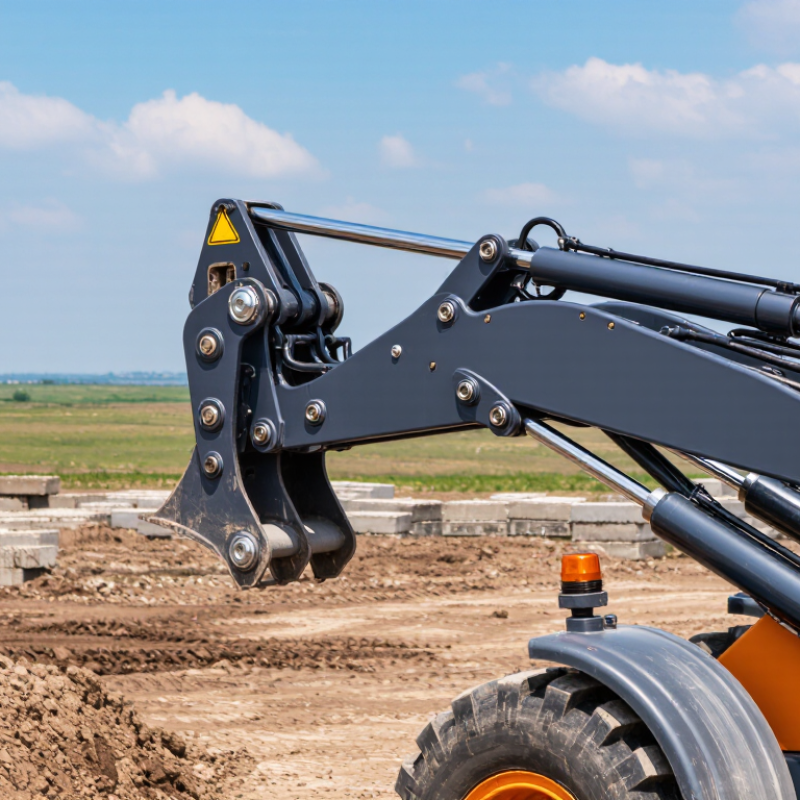
A loader lift cylinder is a hydraulic actuator that raises and lowers the front loader arms. It converts pressurized oil into controlled linear movement. A pump sends oil through a valve into the cylinder barrel. Pressure pushes the piston, while the chrome-plated rod transfers force to the arms.
The numbers matter. ISO 6020/2 specifies a nominal working pressure of 160 bar for medium-duty hydraulic cylinders. At that pressure, an 80 mm bore can theoretically produce about 80.4 kN during extension. A 45 mm rod reduces retraction force to roughly 55 kN. Actual output falls with friction, leakage, temperature, and valve losses. That detail is easy to overlook.
In field inspections, I check rod scoring, seal damage, and uneven arm movement first. Oil leaking around the gland often signals contamination or excessive side loading. A cylinder should not carry misalignment alone. Mounting pins, bushings, and the frame share that burden. ISO 6022 lists 250 bar nominal pressure for heavy-duty cylinders, but higher pressure does not automatically mean better service. I have seen oversized cylinders react slowly because the hydraulic circuit could not supply enough flow. The selection process is still imperfect. Bore, stroke, pressure, pin geometry, seal material, and local temperature must match the loader’s working conditions. Shamefully, “stronger” is sometimes chosen before “suitable.”
Key Types and Specifications of Loader Lift Cylinders
Choosing the best loader lift cylinder starts with identifying the correct cylinder type. Double-acting cylinders provide controlled lifting and lowering under changing loads. Welded cylinders suit compact loaders because their bodies resist movement and save installation space. Tie-rod designs remain useful where maintenance access matters. Telescopic cylinders can offer longer travel, but they require careful alignment and dirt protection. They are not ideal for every loader.
Key specifications deserve close attention. Measure the bore diameter, rod diameter, stroke, and retracted length before ordering. A larger bore creates more lifting force at the same hydraulic pressure. A thicker rod improves resistance to bending, especially when the bucket carries uneven material. Check the working pressure, pin diameter, mounting width, and port size as well. The cylinder must match the loader’s hydraulic circuit, not just its physical position.
Seal material should fit the working temperature and operating environment. Dusty quarry sites need strong wipers and corrosion-resistant rods. Cold regions may require low-temperature seals and suitable hydraulic fluid. In field inspections, I have found that incorrect pin alignment causes damage faster than moderate overload. A perfect specification sheet can still fail during poor installation. I also prefer cylinders tested for leakage, pressure holding, and smooth movement before shipment. These checks improve reliability, although no component remains maintenance-free. Regular inspection of pins, hoses, seals, and rod surfaces remains necessary.
How to Evaluate Cylinder Materials, Design, and Performance
2026 Best Loader Lift Cylinder for Global Buyers
How to Evaluate Cylinder Materials, Design, and Performance
Choosing a loader lift cylinder starts with its working environment, not its catalog appearance. In field inspections, I check mud exposure, temperature swings, shock loads, and available hydraulic fluid. A hardened, corrosion-resistant piston rod usually offers better durability than untreated steel. However, surface treatment must match the climate and maintenance routine. Seals also deserve close attention. They should tolerate pressure, temperature, abrasion, and the specified hydraulic fluid. Cheap sealing materials can create expensive downtime.
Design affects both strength and serviceability. Check the barrel wall, rod diameter, weld quality, mounting pins, and stroke length. The cylinder should resist side loading during uneven lifting. Misalignment can damage seals even when pressure remains normal. Performance testing should include rated-pressure holding, leakage checks, cycle testing, and rod retraction speed. Ask for measurable test records, not broad promises. I have seen cylinders pass a short pressure test but fail after repeated shock cycles. A perfect evaluation is difficult.
Tips: Compare the cylinder with your loader’s real duty cycle. Confirm mounting dimensions before ordering. Inspect seal compatibility with local fluids and temperatures. Leave a small safety margin for pressure and load. Also, do not ignore maintenance access. A design that saves ten minutes during seal replacement may reduce long-term operating costs. Availability can vary by region, so verify documentation, spare parts, and technical support before purchase.
2026 Best Loader Lift Cylinder for Global Buyers
How to Evaluate Cylinder Materials, Design, and Performance
How to read this chart: Theoretical extension force is calculated from piston bore area and hydraulic pressure using
F = P × π × D² ÷ 4. Values exclude friction, seal losses, linkage geometry, and dynamic loads. A reliable loader lift cylinder should combine a correctly sized bore and rod with high-strength steel, a corrosion-resistant rod surface, seals compatible with the selected hydraulic fluid and temperature range, and adequate buckling and fatigue resistance.
Reference pressures: 250 bar and 280 bar. Force values are theoretical and shown in kilonewtons (kN); final cylinder selection must follow the machine manufacturer's load, pressure, stroke, and safety requirements.

 +86-13349293098
 Contact WhatsApp
 Contact Email