+86-13349293098


Buying a Slewing Bearing is an engineering decision, not a simple price comparison. Global buyers must balance load capacity, rotation speed, sealing, delivery reliability, and technical support. A bearing that looks suitable on paper may fail after contamination, poor mounting, or repeated shock loads.
Recent market studies from Grand View Research and Fortune Business Insights show strong, expanding demand across wind energy, construction equipment, robotics, and material-handling systems. However, their market boundaries and forecasts differ. Numbers can mislead. Buyers should verify regional demand, application data, and supplier claims before approving a purchase.
Practical experience shows that the smallest details often create the largest costs. Check bolt patterns, gear accuracy, raceway hardness, lubrication paths, and allowable tilting moments. Request load calculations, dimensional drawings, inspection records, and traceable material certificates. ISO 281 supports bearing-life evaluation, while ISO 76 helps assess static load ratings. These standards improve comparison, but they cannot replace application-specific testing.
A serious sourcing process also examines supplier quality systems, batch consistency, packaging, and after-sales response. SKF’s technical guidance and bearing industry reports repeatedly emphasize correct installation, lubrication, and contamination control. Yet no catalogue can predict every field condition. The following ten Slewing Bearing buying tips help global purchasers question assumptions, compare evidence, and reduce avoidable technical and commercial risk. One point remains easy to miss: the cheapest unit can become the most expensive component after downtime, emergency freight, and redesign.

For global buyers, a slewing bearing should be selected from measured requirements, not catalog capacity alone. Define axial load, radial load, overturning moment, rotation speed, and duty cycle. Include shock loads from starts, stops, and uneven ground.
ISO 281 helps estimate basic rating life, commonly expressed as L10 life. It links dynamic load rating with the equivalent operating load and rotation conditions. A bearing may appear suitable at low speed, yet fail early under frequent reversing or contaminated conditions. Record the real motion pattern. Continuous rotation and intermittent indexing are not equivalent.
ISO 76 supports static load evaluation. This matters when the bearing holds a heavy platform without rotating. Calculate the equivalent static load and compare it with the basic static load rating. Check raceway contact stress, mounting stiffness, bolt preload, and gear forces as well. These details are often missed.
A practical review should use the worst credible load case, not only the average load. I have seen calculations fail because the overturning moment was estimated from a centered load. It was not centered in operation. That mistake was expensive.
Standards provide a reliable calculation framework, but they cannot replace application data. Confirm the manufacturer’s calculation method, safety factors, lubrication conditions, and allowable deformation. ISO equations may need adjustment for complex slewing bearing geometry, frequent oscillation, or severe contamination. Small input errors can change the result. Check them twice.
This chart illustrates how the required basic dynamic load rating increases with operating speed for a 10,000-hour target life. The calculation uses ISO 281 for a ball bearing with an exponent of p = 3, a constant equivalent dynamic load of 100 kN, and the relationship L10 = (C/P)p.
The ISO 76 reference line shows a 200 kN basic static load rating, corresponding to an illustrative static safety factor of 2.0 for a 100 kN equivalent static load. The appropriate safety factor depends on shock, vibration, deformation limits, installation accuracy, and application risk.
Choosing a slewing bearing starts with the machine’s real motion, not only its catalog load. External gears suit accessible drive layouts, while internal gears protect the teeth inside the ring. Gearless designs reduce tooth-related concerns but require a separate torque transmission system. Confirm rotation speed, direction changes, backlash limits, and available mounting space before selecting the gear type.
Tooth module must match transmitted torque, pinion size, and tooth strength. A larger module can improve load capacity, but it may increase noise, weight, and drive dimensions. Check tooth contact under uneven loading, especially when the pinion engages near a joint or frame distortion point.
Peak loads deserve more attention than average loads. Calculate axial force, radial force, overturning moment, acceleration, braking, and wind or impact effects. Use suitable static and fatigue ratings, then apply safety factors based on duty severity and load uncertainty. Standards such as ISO 76 and ISO 281 can support the calculation process, but they cannot replace field data.
A practical review should include bolt preload, flange stiffness, lubrication access, seal exposure, and inspection intervals. Some estimates will be imperfect. Record them, test the critical assumptions, and revise the selection when operating evidence changes.
When buying slewing bearings internationally, material quality deserves more than a mill certificate. Request the steel grade, heat number, and complete traceability records. Ask whether the rings were forged, normalized, or produced from rolled stock. These details affect fatigue life and dimensional stability. Small gaps matter.
Heat treatment requires close verification. Ask for quenching and tempering records, furnace charts, and controlled process dates. For raceways, hardness above 55 HRC is a useful purchasing requirement, but it is not enough alone. Inspectors should measure several points around each raceway, not one convenient location. Check hardness depth, surface uniformity, and possible decarburization. A hardened surface with a weak core may fail under repeated shock loads. Independent laboratory testing can confirm results when documents seem incomplete.
Use calibrated equipment and record the testing method, location, and temperature. Compare supplier data with an incoming inspection sample. Magnetic-particle or visual checks may reveal grinding cracks, though they cannot replace metallurgical analysis. Do not accept vague phrases such as “fully hardened.” Request measurable limits. A common buying mistake is trusting a high HRC value without checking toughness and microstructure. That shortcut can hide brittle areas. No inspection catches everything. However, clear records, repeat measurements, and an agreed acceptance plan make quality decisions more reliable for global buyers.
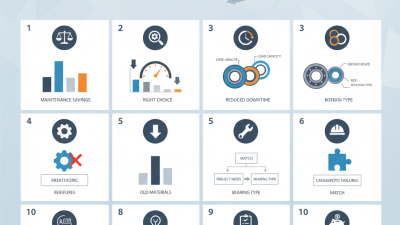
10 Slewing Bearing Buying Tips for Global Buyers
Temperature range should guide the seal and grease selection together. A seal rated for 120°C cannot protect grease that separates at 90°C. Check the bearing’s actual heat exposure, not only the surrounding air temperature. Sunlight, friction, nearby welding, and slow heavy rotation can create hot spots.
For cold environments near −40°C, choose a seal that remains flexible after overnight storage. Stiff sealing material may increase starting torque and reduce protection. The grease must also pump and spread at low temperatures. For operation around 80°C to 120°C, use a grease with suitable thermal stability and oxidation resistance. Confirm its compatibility with the seal material, base oil, and additives. Mixing greases without a compatibility check can cause softening, hardening, or leakage.
A temperature chart is useful, but it can mislead. Real service conditions are rarely constant. Measure housing temperature during startup and under peak load. Leave a practical safety margin; operating continuously at the stated limit deserves caution. Ask the supplier for test conditions, seal compound data, relubrication guidance, and storage limits. In dusty or wet sites, inspect the lip seal for cuts and hardened edges. Small damage matters.
Field experience also shows that grease quantity is easy to get wrong. Too little grease increases wear, while too much can raise temperature. Record the ambient range, speed, load, sealing arrangement, and maintenance interval before approving a purchase. A technically correct selection may still fail when installation practices are overlooked.
A practical purchasing guide for selecting slewing bearings, seals, lubricants, and inspection requirements across different operating-temperature conditions.
| No. | Buying Dimension | Recommended Temperature Focus | Seal Selection Guidance | Grease Selection Guidance | What Global Buyers Should Verify |
|---|---|---|---|---|---|
| 1 | Define the complete temperature profile | −40°C to 120°C | Specify the lowest start-up temperature, normal running temperature, short-term peak temperature, and heat exposure from nearby equipment. | Choose a grease whose rated operating range covers both the coldest start-up and the hottest continuous condition. | Request separate limits for continuous operation, intermittent operation, storage, transport, and installation. |
| 2 | Match elastomer seals to cold conditions | −40°C to −20°C | Use a low-temperature-compatible seal material that remains flexible and maintains contact pressure during cold starts. A hardened seal can allow water and dust ingress. | Use a low-temperature grease that does not become excessively stiff at start-up and does not prevent bearing rotation. | Check the seal material, low-temperature flexibility, seal lip design, and compatibility with the selected grease. |
| 3 | Control moisture, ice, and condensation | −40°C to 20°C | For outdoor equipment, prioritize effective exclusion seals and protected grease paths. Consider drainage and shielding where melting ice or condensation may accumulate. | Use a water-resistant grease suitable for the expected moisture level; water resistance does not replace correct sealing or relubrication. | Confirm corrosion protection, seal retention, drainage provisions, and the planned relubrication interval. |
| 4 | Confirm the normal operating range | 0°C to 60°C | Standard contact seals may be suitable when temperature, contamination, and speed remain within the bearing design limits. | Use a grease with suitable base oil viscosity, load-carrying capability, and mechanical stability for the actual speed and load. | Provide load cycles, rotation speed, oscillation angle, duty cycle, and environmental contamination data before final selection. |
| 5 | Prepare for elevated ambient temperatures | 60°C to 90°C | Select seal materials with adequate resistance to heat, oxidation, and lubricant exposure. Seal life can decrease as temperature rises. | Use a high-temperature-stable grease with an appropriate dropping point and oxidation resistance; the dropping point is not the same as the maximum operating temperature. | Verify the permissible bearing temperature, heat-transfer conditions, lubrication interval, and any required thermal derating. |
| 6 | Evaluate high-temperature peaks | 90°C to 120°C | Use seals specifically approved for the measured peak temperature and exposure duration. Short peaks and continuous heat should be treated differently. | Choose a grease that retains consistency and resists oxidation at the real bearing temperature, not merely the surrounding air temperature. | Ask for documented temperature limits, peak-duration assumptions, grease compatibility data, and a revised service interval. |
| 7 | Check load, speed, and temperature together | All ranges | Higher speed, load, friction, and misalignment can raise the internal bearing temperature above ambient temperature. | Grease selection must consider base oil viscosity, thickener type, load, speed factor, and relubrication method as a combined system. | Supply axial load, radial load, tilting moment, rotational speed, oscillation frequency, and expected acceleration or shock loads. |
| 8 | Verify grease and seal compatibility | −40°C to 120°C | Some seal compounds can swell, shrink, harden, or lose elasticity when exposed to incompatible base oils, additives, solvents, or cleaning agents. | Do not mix greases solely because they share the same NLGI grade. Different thickeners and additives may be incompatible. | Require the grease type, NLGI consistency, base oil type, thickener type, operating range, and compatibility guidance. |
| 9 | Specify the lubrication and maintenance plan | −40°C to 120°C | Seal performance depends on correct assembly, shaft or housing condition, contamination control, and avoidance of seal damage during installation. | Define grease quantity, application points, relubrication frequency, purge procedure, and cleaning requirements. More grease is not always better. | Request an installation drawing, lubrication chart, maintenance schedule, and storage instructions for the target climate. |
| 10 | Validate the specification before ordering | −40°C to 120°C | Confirm that the seal arrangement, material, and temperature rating match the actual environment, including dust, water, chemicals, and ultraviolet exposure. | Confirm that the factory fill or recommended grease is suitable for the complete temperature range and is compatible with the planned maintenance grease. | Approve drawings, dimensional tolerances, internal clearance or preload, bolt pattern, material certificates, test requirements, packaging, and traceability documents. |
Global buyers should treat a slewing bearing as a controlled engineering component, not a catalog item. Supplier quality must be checked through documented processes, inspection records, and real production samples. Ask for evidence. Review material certificates, heat-treatment results, hardness readings, and dimensional reports before approving a shipment. A polished certificate is not enough if the measurement method remains unclear.
Traceability should connect each bearing to its steel batch, machining date, operator, inspection equipment, and final packing record. This detail matters when a bearing operates under heavy loads, vibration, or changing temperatures. Request serial numbers and retain inspection files for future maintenance. Tolerance control also deserves practical attention. Confirm raceway geometry, gear runout, mounting-hole position, clearance, and sealing performance against the application drawing. Measure, do not assume. A tolerance suitable for slow rotation may create problems in indexing equipment or wind-related machinery.
Purchase price can hide expensive risks. Compare expected service life, lubrication intervals, installation labor, storage needs, replacement downtime, and technical support. A cheaper bearing may require more frequent adjustments or earlier replacement. My own review habit is imperfect: I sometimes focus too heavily on test data and not enough on packing quality. Yet dents, corrosion, or contamination can begin during transportation. Ask how the supplier protects finished surfaces and handles nonconforming parts. A reliable supplier welcomes these questions and explains corrective actions with dates, owners, and verifiable records.